New factsheet supports awareness of Grapevine berry inner necrosis virus
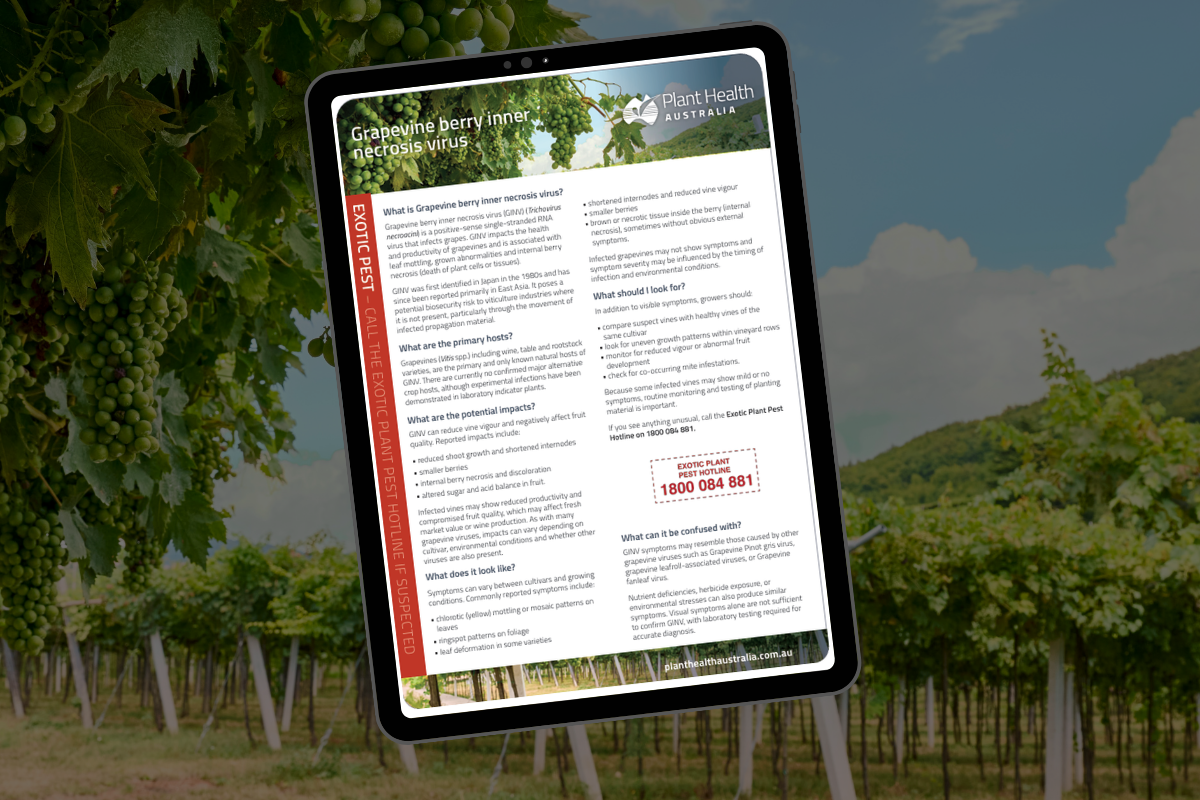
Plant Health Australia (PHA) has released a new Grapevine berry inner necrosis virus (GINV) factsheet to support awareness, early detection and reporting across Australia’s grape industry.
GINV, Trichovirus necroacini, has been detected in several grapevines and rootstocks across Australia’s eastern seaboard. This is the first time it has been recorded in Australia.
Where it occurs overseas, the virus can impact vine health and productivity, including discolouration and growth reduction. However, many grapevines can be infected and not show symptoms. While the virus was detected in vines displaying restricted spring growth symptoms, there is currently no evidence directly linking the observed symptoms to the presence of the virus.
Viticulture industries and associated companies are continuing surveillance and diagnostic testing to better understand the extent of the virus in Australia and inform management approaches. There are no domestic or international trade restrictions currently in place as a result of this detection.
Preventative measures and strong on-farm biosecurity practices are key to minimising potential impacts. Growers are encouraged to:
- source certified, virus-tested planting material
- monitor vines for unusual symptoms
- implement practical vineyard biosecurity measures
- report any suspect vines promptly.
The new factsheet provides clear, practical guidance to help growers and vineyard workers recognise potential symptoms, understand transmission pathways, and know what steps to take if concerns arise.
Early reporting supports timely investigation and helps protect Australia’s grape industry. If you notice anything unusual, report it to your local agriculture authority by calling the Exotic Plant Pest Hotline on 1800 084 881.
Download the Grapevine berry inner necrosis virus factsheet.