PHA’s Digital Systems: supporting Australia’s biosecurity network
Plant Health Australia’s (PHA) Digital Systems team drives the databases and critical national infrastructure that enable plant health surveillance, diagnostics, and information sharing.
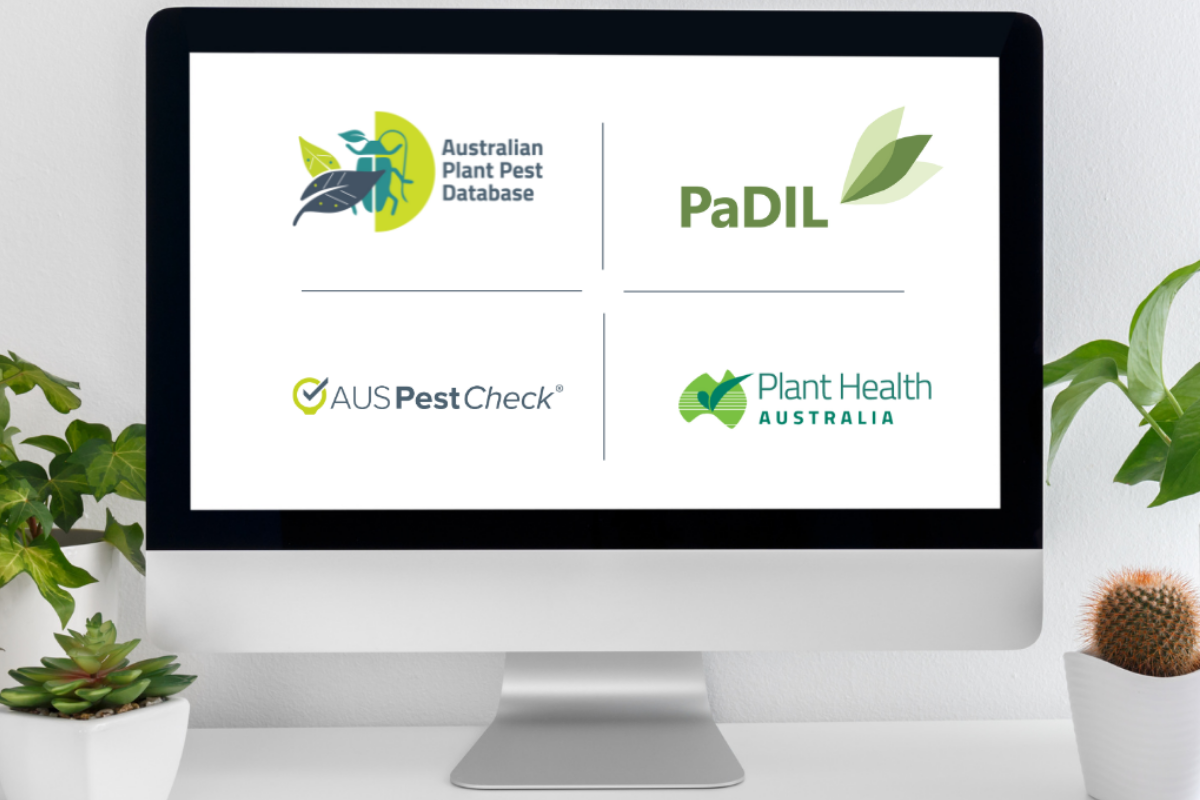
Our role is to ensure that PHA’s digital systems and tools are reliable, secure, and fit for purpose as Australia’s diverse needs evolve across the biosecurity continuum. Within a robust IT Service Management (ITSM) framework, the team manages three significant biosecurity platforms endorsed by the National Biosecurity Committee.
The ongoing support provided by state, territory and Commonwealth governments enables the sustained operation and enhancement of our platforms. Looking forward, greater industry participation will strengthen the sustainability and functionality of these platforms, and we remain committed to collaborating with PHA Members across government and industry.
AUSPestCheck® – Australia’s national surveillance data platform
Operated and maintained by PHA, AUSPestCheck® is a secure, cloud-based environment where government, industry and research partners can contribute, visualise and share surveillance data to strengthen national biosecurity outcomes.
Created as a national collaborative asset, AUSPestCheck® brings together historical and ongoing surveillance data from multiple sources into a single, protected system. With strong data security, trusted governance and expanding interoperability, AUSPestCheck® helps participants understand surveillance coverage, identify priority gaps, reduce duplication of effort, and generate evidence to support domestic and international market access.
AUSPestCheck® is designed to grow alongside Australia’s biosecurity needs, supported by strong partnerships and continuous improvement to increase functionality, participation and national value.
Australian Plant Pest Database (APPD) – verified pest and pathogen records
The APPD is a secure national database containing over 1.4 million voucher specimen records from 16 herbaria and biological collections across Australia, including plant pathogens, insects, and more. By linking records to verified specimens, the APPD provides a trusted point of reference for biosecurity decision-making, research, and regulatory use. The data in APPD facilitates evidence-based assessments of pest presence and distribution, which are critical for trade, response planning, and policy development.
Pest and Disease Image Library (PaDIL) – identification image resource
PaDIL is an open-access national image library supporting pest and disease diagnostics through high-quality imagery and research-based identification methods.
The platform contains more than 7,200 species across six biosecurity and biodiversity-focused libraries. Users can compare diagnostic images between species and access detailed diagnostic information.
PaDIL is widely used by multidisciplinary communities, including researchers and government representatives, to improve diagnostic confidence and consistency, and it is accessed by users around Australia and the world. Access to reliable visual reference material is important for preparedness and early detection activities.
IT Service Management (ITSM)- strengthening the reliability of our digital systems
The Digital Systems team manages system upgrades, incident response, cybersecurity and ongoing improvements to ensure stable and secure services, using a structured approach to service management.
Our ITSM team provides an overarching structure that guides how we plan, deliver, support, and continually enhance PHA’s digital systems. Sitting across all technology services, ITSM ensures our systems operate reliably, efficiently, and in support of business needs.
Aligned with Information Technology Infrastructure Library (ITIL) principles, the framework supports system stability, security and responsiveness. Through defined practices such as incident management, request fulfilment, change control, release management and problem management, the ITSM team maintains service reliability while enabling ongoing improvement.